
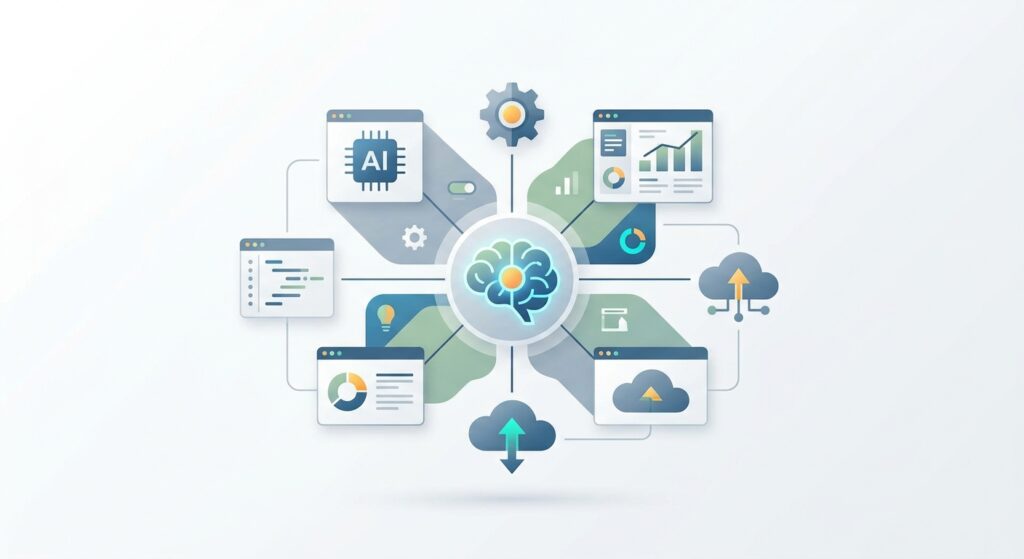
What if you could hire a receptionist, follow-up coordinator, and proposal writer tomorrow—no interviews, no onboarding, just instant capability?
That’s not a pitch. It’s what 65% of businesses are already doing. They’re building digital staffs with AI agents that handle routine operations while humans focus on growth.
This isn’t about replacing your team. It’s about giving them backup.
The shift from automation to delegation
We’ve been automating for decades. Spreadsheets automated calculations. Email automated memos. CRM software automated Rolodexes.
But AI agents are different. They don’t just automate—they delegate. You can hand them a job and walk away.
Think receptionist, not robot. Someone (or something) you trust to handle calls while you’re in a meeting. Someone who follows up with leads when you forget. Someone who drafts proposals so you can focus on closing deals.
That’s the shift happening right now. And it’s more accessible than you think.
The four pillars of your digital staff
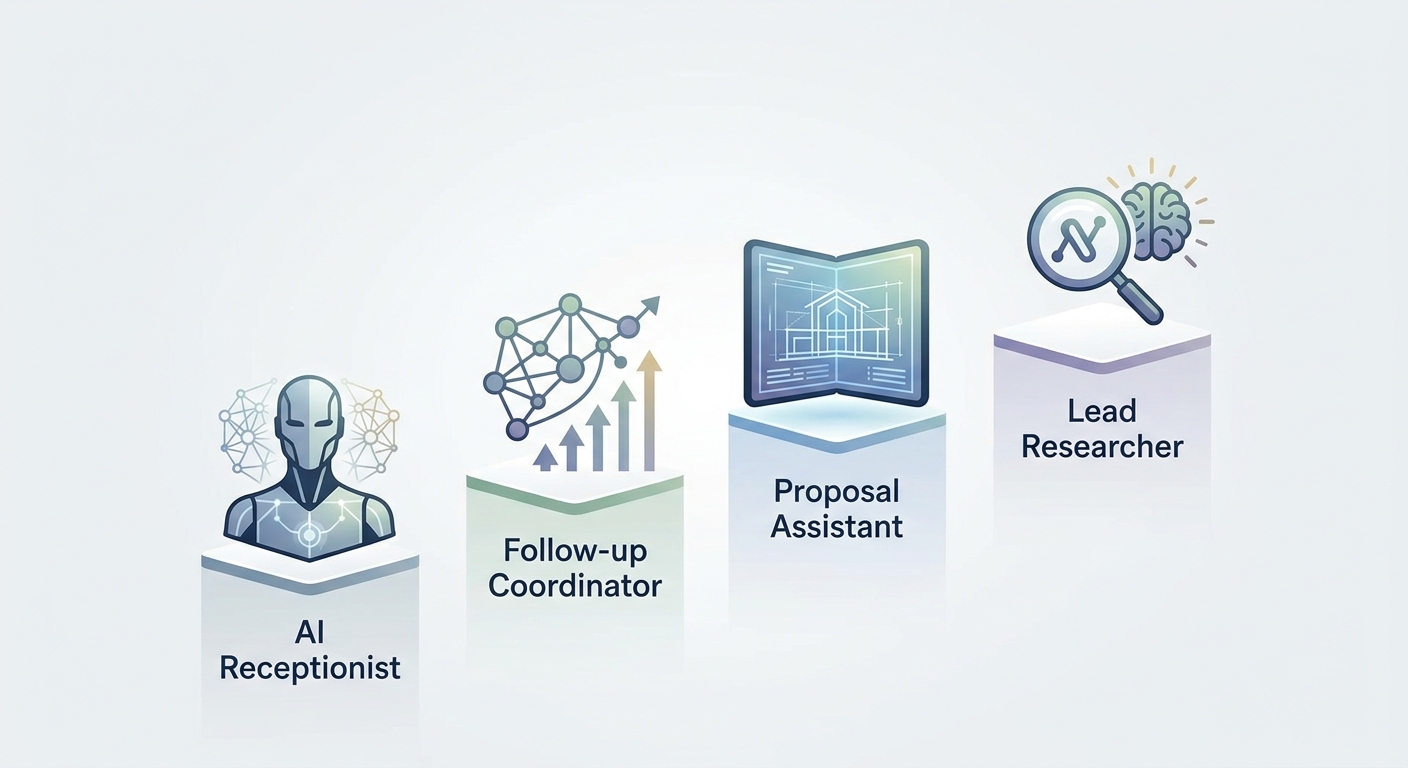
Most businesses need the same four roles covered. Let’s break them down.
1. AI receptionist: your 24/7 front desk
What it does:
Answers calls. Books appointments. Routes urgent matters to the right person.
Why it matters:
You can’t answer every call. Neither can your team. But every missed call is a missed opportunity.
AI receptionists fill the gap. They pick up on the first ring, handle common questions, schedule appointments directly into your calendar, and escalate complex issues to humans.
Setup takes 5-15 minutes for basic configurations. Most platforms charge around $199/month—less than a day of a human receptionist’s salary.
Who needs this:
Professional service firms, medical offices, agencies—anyone who can’t afford to miss inbound calls but can’t justify a full-time front desk.
Real-world impact:
A medical practice in our network was having nurses answer phones mid-appointment. They switched to an AI receptionist for scheduling. Result? Nurses focus on patient care. Patients get immediate scheduling. No more “I’ll call you back.”
2. Follow-up coordinator: the persistence engine
What it does:
Sends follow-up emails. Nurtures leads based on behavior. Tracks engagement. Adapts messaging based on what’s working.
Why it matters:
Most leads don’t convert on first contact. They need 5, 7, sometimes 10 touches. You know this. But actually doing it? That’s where businesses fail.
AI follow-up coordinators don’t forget. They track who opened what, who clicked where, and adjust their approach accordingly. Not static drip campaigns—adaptive, behavior-driven conversations.
64% of businesses using AI for lead generation report higher-quality leads than manual outreach. The reason? Consistency. AI doesn’t get busy. It doesn’t lose track. Every lead gets the attention it deserves.
Who needs this:
B2B companies with long sales cycles. Service businesses where leads take time to convert. Anyone frustrated by prospects going cold.
Real-world impact:
A B2B SaaS company added a follow-up coordinator to their pipeline. 30% increase in qualified meetings. Sales team stopped chasing lukewarm leads and focused on closing ready buyers.
3. Proposal assistant: win more, write less
What it does:
Analyzes RFPs. Drafts responses from your content library. Checks compliance. Flags missing requirements.
Why it matters:
Proposals take forever. You’re pulling from old docs, rewriting sections, making sure you didn’t miss a compliance checkbox. Meanwhile, your competition already submitted.
AI proposal assistants can automate up to 80% of the process. They pull relevant content, adapt it to the RFP requirements, and hand you a near-complete draft for final review.
Microsoft reported a 50% reduction in content library maintenance after implementing AI-powered proposal tools. Faster turnaround. Higher win rates. Less busywork.
Who needs this:
Agencies, consultancies, B2B service providers—anyone responding to RFPs or writing custom proposals regularly.
Real-world impact:
A marketing agency was spending 10-15 hours per RFP response. After implementing a proposal assistant, they cut that to 3-4 hours of review and customization. Same quality. Triple the capacity.
4. Lead researcher: intelligence on autopilot
What it does:
Researches prospects. Enriches CRM data. Scores leads in real time. Flags buying signals.
Why it matters:
Your sales team spends hours researching prospects before making calls. Company size, recent news, decision-makers, budget signals—it’s necessary, but it’s slow.
AI lead researchers handle the grunt work. They pull data, score fit, identify intent signals, and surface the leads most likely to convert. Your team shows up to every call prepared.
The best part? It updates continuously. A prospect visits your pricing page? Score goes up. They engage with a competitor? You know instantly.
Who needs this:
Sales teams, business development, account-based marketing—anyone doing outbound or managing a large pipeline.
Real-world impact:
One team cut research time from 30 minutes per lead to under 5. Same quality intel. More calls. Better close rates.
How to build your digital staff (without breaking anything)
Don’t try to do this all at once. Here’s the smart approach.
Step 1: Identify your biggest bottleneck
Ask yourself:
- Where do leads die?
- What eats the most time?
- What would benefit from 24/7 coverage?
For most businesses, it’s either reception (missed calls) or follow-up (leads going cold).
Step 2: Start with one agent
Pick the highest-impact role. Implement it. Get it working. Then add the next.
Trying to deploy four agents at once is how projects stall. One at a time. Nail it, then scale it.
Step 3: Integration is everything
Your AI agents need to talk to your systems. CRM, calendar, email—data has to flow.
Most platforms integrate with HubSpot, Salesforce, Google Workspace, and other common tools. Make sure that’s in place before you launch.
A receptionist that can’t update your CRM is just an expensive answering machine.
Step 4: Train and refine
AI gets better over time. Monitor what’s working. Adjust scoring models. Update response templates. Tweak qualification criteria.
Think of it like onboarding a new hire. They improve with feedback.
What this means for your business
The math
Traditional receptionist: $35,000–$50,000/year + benefits
AI receptionist: ~$2,400/year
Follow-up coordinator (fractional hire): $30,000–$40,000/year
AI follow-up: ~$1,200–$3,000/year (depending on volume)
For most SMBs, payback happens in 2-4 months. After that, it’s pure margin improvement.
The reality check
AI doesn’t replace humans. It amplifies them.
The best results come from pairing AI with people. AI handles the repetitive stuff. Humans handle the complex, relationship-driven work.
So the question isn’t “Should I replace my team?” It’s “What should my team focus on?”
If your sales team spends half their day researching leads, you’re wasting talent. Let AI research. Let humans sell.
The competitive edge
Early adopters are scaling faster. They’re responding to leads within minutes, not hours. They’re winning proposals because they’re first to respond. They’re closing deals because nothing falls through the cracks.
You don’t have to be an early adopter. But you do need to keep pace.
Getting started
Here’s your action plan:
1. Assess where you need help most
Reception? Follow-up? Proposals? Research? Pick one.
2. Set a 30–90 day timeline
Most implementations take a month or two, including setup and refinement.
3. Avoid these mistakes:
- Trying to automate everything at once
- Skipping integration (your agents need to talk to your systems)
- Setting it and forgetting it (AI improves with monitoring)
4. Track success metrics:
- Response time (calls, leads, proposals)
- Conversion rates (leads to meetings, proposals to wins)
- Time saved (hours per week your team gets back)
Your team just got bigger
Building a digital staff isn’t about cutting costs. It’s about expanding capacity.
You get a receptionist who never sleeps. A follow-up coordinator who never forgets. A proposal writer who never misses a deadline. A researcher who works in the background while you focus on closing.
The shift is from “doing everything” to “orchestrating everything.” You become the conductor. Your digital staff handles the notes.
Ready to build yours?
Eclipse Digital helps businesses implement AI agents without the guesswork. We’ll assess your bottlenecks, recommend the right tools, handle integration, and train your team.
If you’re tired of missed opportunities and maxed-out capacity, let’s talk.
Contact Eclipse Digital to schedule a Digital Staff Assessment.
Published by Eclipse Digital • March 2026

